
Sourdough starter mold: what it looks like and what to do
Mold on a sourdough starter is fuzzy and raised, in green, blue, black, gray or white spots, or pink and orange streaks. If you see it, throw the starter out. A clear to dark liquid on top is hooch, and a flat white wrinkled skin is usually kahm yeast; neither is mold.
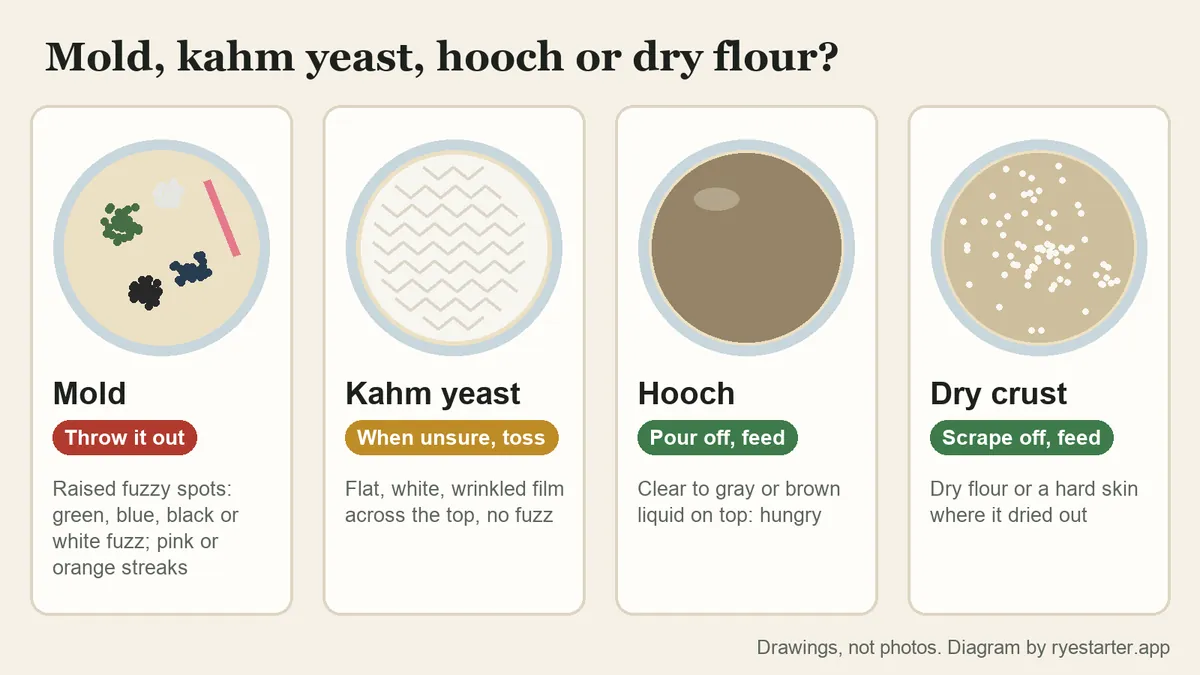
Mold or not? Check these four
| What you see | What it is | What to do |
|---|---|---|
| Fuzzy, raised spots in any color | Mold | Throw it out |
| Pink, orange or red streaks | Bacteria | Throw it out |
| Flat, white, wrinkled film, no fuzz | Kahm yeast, usually | If unsure, throw it out |
| Clear, gray, brown or dark liquid on top | Hooch (alcohol) | Pour off or stir in, then feed |
| Dry flecks or a hard skin | Dried flour or starter | Scrape off, feed |
Why you shouldn't save a moldy starter
Mold grows threads below the surface, so the part that looks clean may not be. Some bakers scoop from the bottom and feed it again, but nothing in a home kitchen can confirm it worked. Starters are cheap to replace, and a backup makes it painless.
What causes mold
- Long gaps between feeds at room temperature. As the starter runs out of food, its acidity drops off and mold gets a chance.
- Dried starter on the jar walls above the surface. Scrape the sides down after every feed.
- A new starter in its first week, before the yeast and bacteria are strong enough to crowd out mold.
- A dirty jar or spoon. Move the starter to a clean jar every week or two.
Keep a backup
Before you need it, spread a thin layer of starter on parchment, let it dry completely, crumble it and keep it in a sealed jar. Dried starter keeps for months and revives with a few feedings. A small jar in the fridge works too.
Track it instead of guessing
Rye reminds you when to feed, so the starter never sits hungry long enough to go bad, and its photo check flags possible mold, hooch and kahm yeast. It is a second opinion, not a guarantee: when in doubt, throw it out.
Coming soon to the App StoreQuestions
What does mold on sourdough starter look like?
Raised, fuzzy spots that sit on top of the starter, in green, blue, black, gray or white, or pink and orange streaks or patches. Mold looks like mold on bread. Liquid on top is hooch, not mold, and dry flecks are usually dried flour.
Can I scrape mold off my sourdough starter?
We don't recommend it. Mold sends threads below the surface you can't see, and pink or orange growth is bacteria. Throw the whole starter out, wash the jar well, and start again from a backup if you have one.
Is a white film on sourdough starter mold?
A flat, wrinkled, white film with no fuzz is usually kahm yeast, which is not mold. A white film that is fuzzy or raised in spots is mold. If you can't tell which, throw it out.
How do I keep my starter from getting moldy?
Feed it on a regular schedule, use a clean jar, scrape the sides down after each feed so dried starter doesn't sit above the surface, and keep a lid on. A well-fed, acidic starter resists mold.